Site Suitability Assessment
We evaluate soil type, slope, and water catchment potential before starting, ensuring your dam location and design will actually hold and manage water effectively.
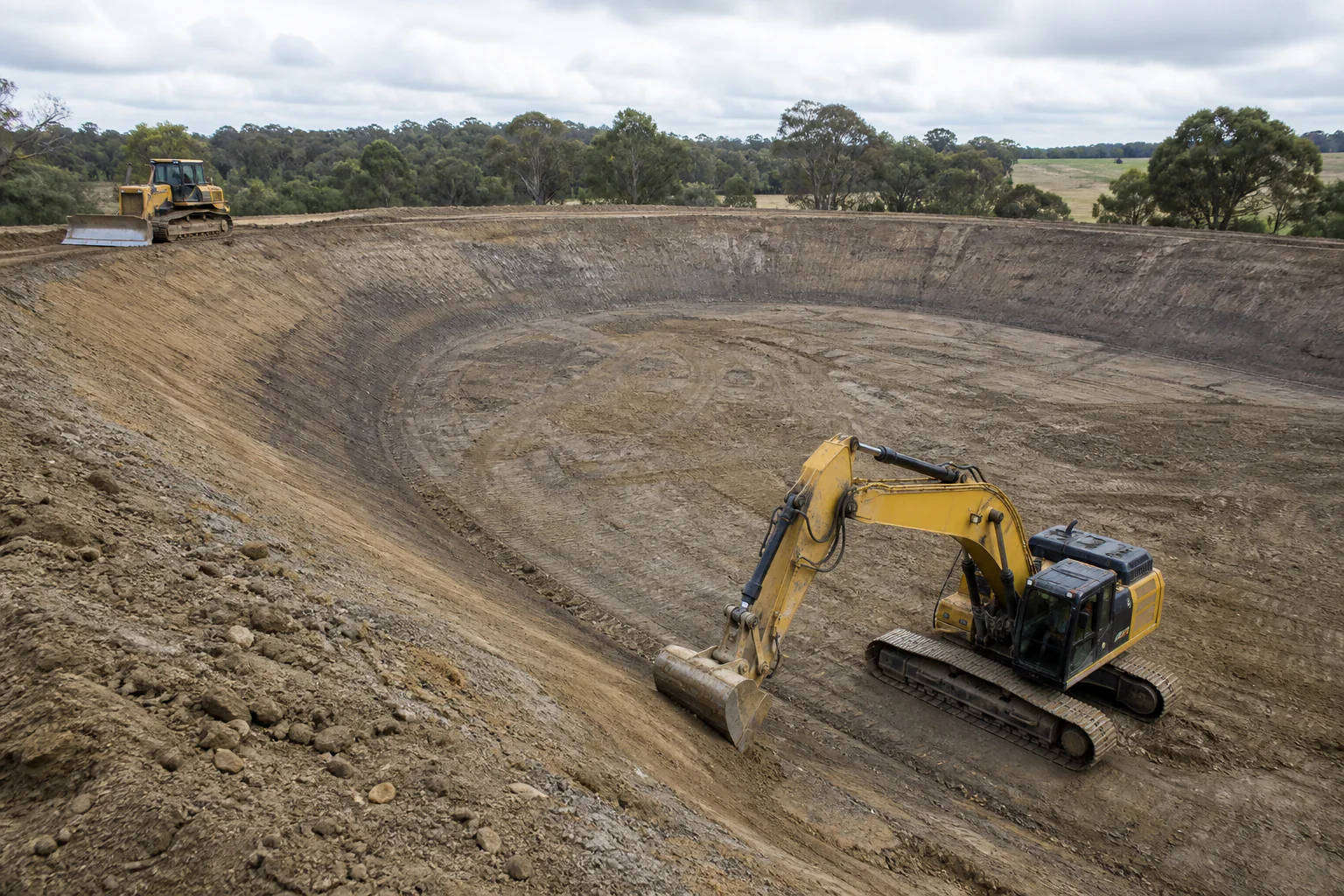
Dam Construction
Rural dam excavation and shaping planned around soil conditions, catchment, safe batters and access.
Clear scope. Clean result.
Good earthworks solve more than the immediate excavation. We consider access, levels, ground conditions, spoil, drainage and handover requirements before machinery arrives.
For dam construction projects across Perth, our operators combine practical site experience with modern equipment and a disciplined approach to finish. You receive a clear scope, an agreed plan and communication throughout the work.
Perth Dam Construction is one part of the wider earthworks capability we bring to residential, rural, commercial and civil projects.
We evaluate soil type, slope, and water catchment potential before starting, ensuring your dam location and design will actually hold and manage water effectively.
We excavate and shape the dam to the correct depth, slope, and capacity for your water storage needs, using machinery suited to the scale of the project.
Proper compaction of the dam base and walls is essential to prevent excessive water loss through seepage, a step we prioritise throughout construction.
We factor in overflow management and surrounding drainage to prevent erosion or flooding issues once the dam begins holding water during rainfall events.
Excavated material is often reused for surrounding levee walls or landscaping, making practical use of spoil generated during the dam construction process.
Once complete, your dam is shaped, compacted, and ready to begin holding water, supporting stock, irrigation, or general property water storage needs going forward.
Frequently paired with Excavation, Bulk Excavation, Footing Excavation, Basement Excavation and connected preparation tasks where access, levels and clean handover matter—all part of our excavation sub-services capability.
Plant and attachments are selected after access, reach, ground conditions, material volume and the required finish have been reviewed.
Requirements vary by council, property and scope. Relevant approvals, service locating and site controls must be confirmed before work begins.
What shapes the price
No two sites price the same. These are the factors that move a dam construction quote most.
Larger dams requiring greater excavation volume and shaping naturally cost more due to increased machinery time and material movement.
Sites with soil less suited to water retention may require additional compaction or lining work, increasing the overall construction cost.
Rural properties with difficult access for larger machinery can affect equipment options and increase the time required for dam construction.
Incorporating proper overflow management and surrounding drainage into the dam design adds scope and therefore cost to the project.
Capability in context
Dam construction involves excavation, shaping, and compaction, and we already have the machinery needed for every stage of the process. Rather than coordinating separate excavation and construction contractors, our team manages your dam project from initial digging through to final shaping and compaction. That means a properly built dam completed by one accountable team, without the delays that come from waiting on multiple companies to align schedules.
Scope clarity
A dam holds water because of how it was built, not how big it looks. Here is our part of that.
Why choose us
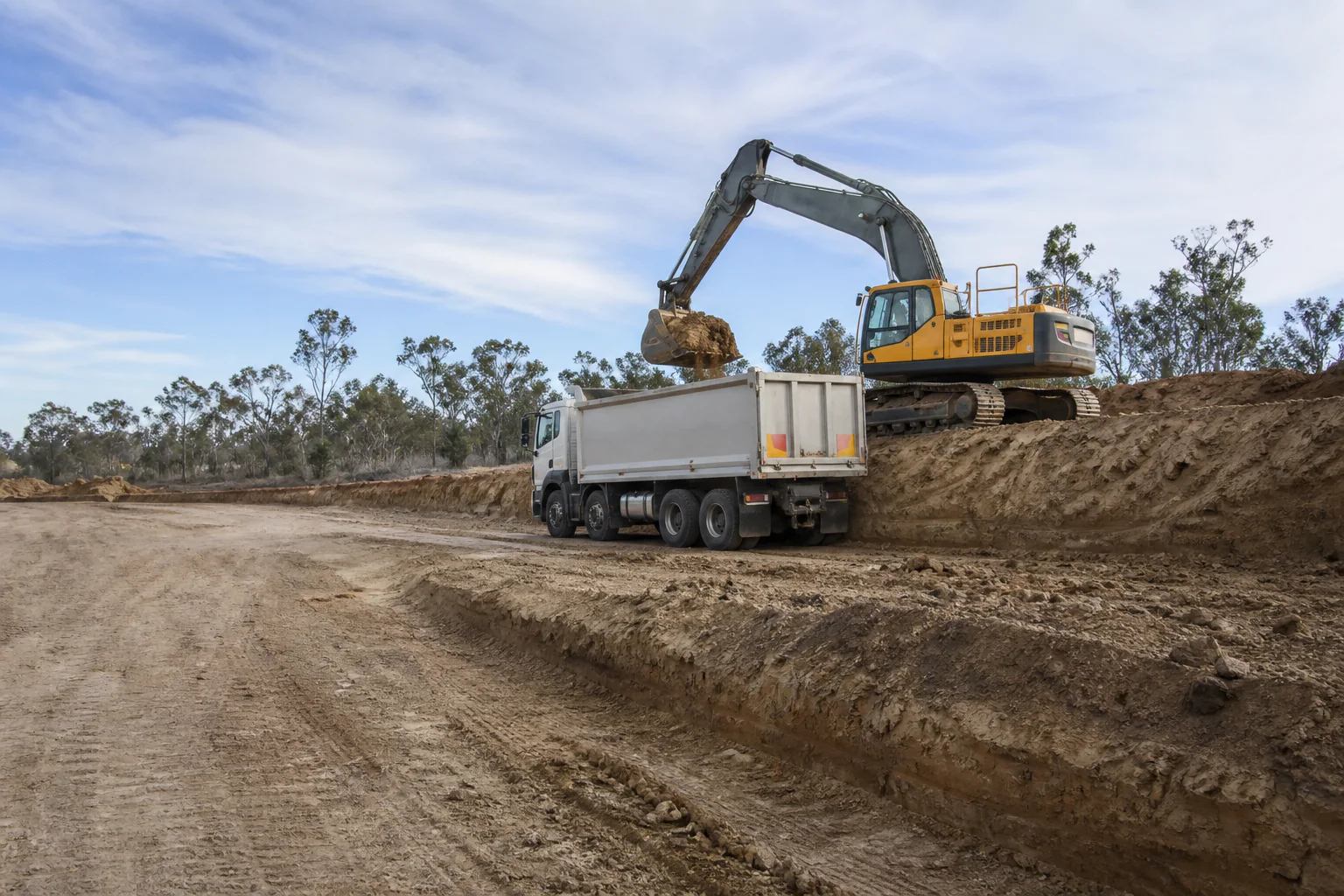
A dam that doesn’t hold water properly isn’t just disappointing—it’s a wasted investment. We assess soil type, slope, and water catchment potential before starting, ensuring your dam’s location and shape will actually manage water effectively for its intended purpose. Our team excavates and shapes to the correct depth and capacity, prioritising thorough compaction throughout construction to prevent excessive water loss through seepage.
We factor in overflow management and surrounding drainage from the outset, reducing the risk of erosion or flooding once the dam begins holding water during rainfall events. Excavated material is often put to practical use for surrounding levee walls or landscaping rather than wasted. Having constructed dams across rural and semi-rural Perth properties, we understand what genuinely makes a dam perform well over years of use, not just look right on completion day. That practical, results-focused approach is what sets our dam construction service apart.
Before machinery arrives
A dam is shaped once, around water that arrives later. These four inform where it goes and how big.
Ensure machinery can reach the proposed dam site without obstruction. Larger excavators often need wider clearance than typical rural access tracks provide.
Point out natural drainage lines or seasonal water flow across the property. This helps confirm the dam location will capture and hold water effectively.
Let us know your intended use, whether stock water, irrigation, or general storage, so the dam is sized appropriately for your actual needs.
Some dam construction may require approval depending on size and location. Confirm this beforehand to avoid delays once construction is ready to begin.
Areas we serve
Dams are a rural fringe thing more than anything—acreage properties often need water storage for stock or irrigation, and that’s where most of our dam work happens.
We’ll take on dam projects anywhere across greater Perth’s rural and rural-residential areas.
Frequently Asked Questions
We service the Perth metropolitan area and can assess regional or rural projects by arrangement. Add your suburb to the quote request and we will confirm availability.
That depends on the scope, access and information available. Straightforward work may be assessed from plans and photographs, while complex sites usually benefit from an inspection.
Requirements vary by council, property and project scope. Confirm the applicable requirements before work begins; we can help identify questions to raise with the relevant authority.
The service range covers residential, rural, commercial and civil work. Final suitability depends on access, program, plant requirements and the confirmed project scope.